
Design and Planning
Regulation 25A Report
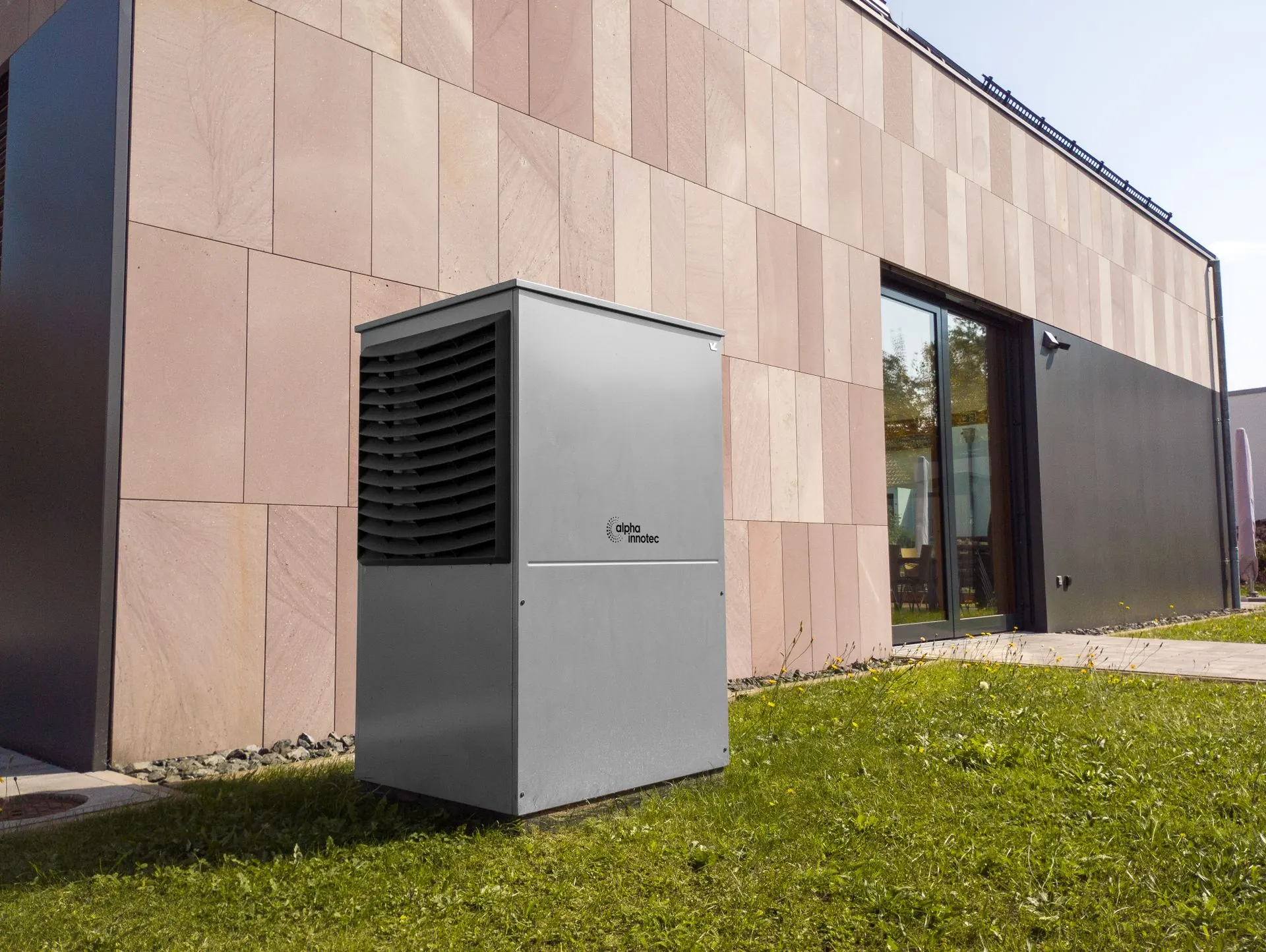
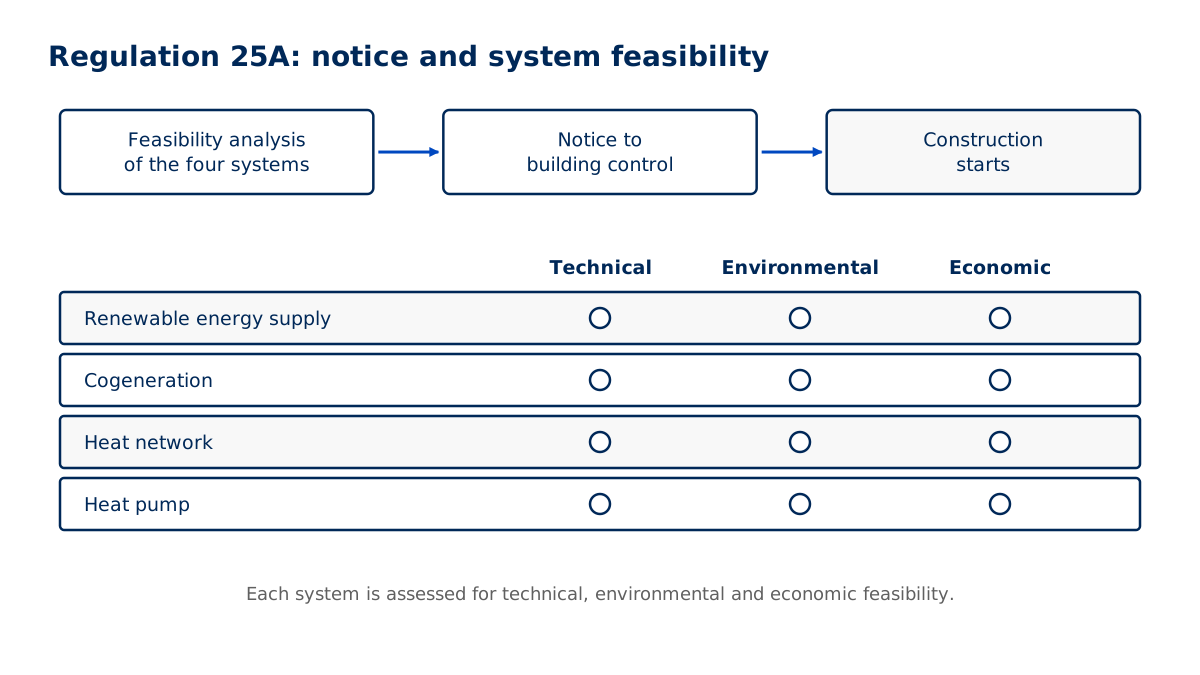
It is also called a high-efficiency alternative systems report. It looks at whether systems such as heat pumps, heat networks, cogeneration and renewable energy supply are technically, environmentally and economically feasible for the building, and records the conclusion.
Tell us about the building and when work is due to start, and we will confirm the scope and price.
The analysis is short for most projects, but it has to be done before construction starts, so it should be on the pre-start checklist alongside the design-stage SAP or SBEM calculation.
When a Regulation 25A report is needed
Regulation 25A of the Building Regulations 2010 says that before construction of a new building starts, the person who is to carry out the work must analyse and take into account the technical, environmental and economic feasibility of using high-efficiency alternative systems, if available. The regulation names decentralised energy supply systems based on renewable sources, cogeneration, district or block heating or cooling, and heat pumps.(Source: The Building Regulations 2010, regulation 25A (legislation.gov.uk))
For a building that is not a higher-risk building, the person carrying out the work must give the building control authority a notice, not later than the beginning of the day before work starts, stating that the analysis has been carried out, is documented and is available for verification. For a higher-risk building, the notice must accompany the application for building control approval. In both cases a copy of the analysis must be available for inspection on request.
The regulation allows the analysis to be carried out for individual buildings, groups of similar buildings or common building types in the same area.
The regulation defines cogeneration and the other terms it uses, and the analysis must consider each system it lists where available. A conclusion that a system is not feasible should give the reason, such as site constraints, cost or the building's energy demand.
Projects needing a Regulation 25A report
New homes
Use the proposed fabric and servicing assumptions to inform a building-specific comparison.
Non-domestic buildings
Explain operating patterns and hot-water demand rather than borrowing a domestic appraisal.
Sites near shared infrastructure
Provide actual connection information so availability is investigated rather than presumed.
How a Regulation 25A report is prepared
01
You send the drawings, building use and planned start date.
02
We confirm whether the building is a higher-risk building, which changes when the notice is due.
03
The consultant reviews the site and building energy demand.
04
Each system named in the regulation is assessed for technical, environmental and economic feasibility.
05
Conclusions are recorded, with the reasons for the system chosen.
06
You receive the report and the notice wording for Building Control.
07
If the design changes before work starts, the analysis is updated so it still reflects the building.
Regulation 25A notice deadline checker
How this tool decides
Planned construction start date
Enter your project date.
Building control route
- Not a higher-risk building
- Higher-risk building
- Not yet confirmed
Regulation 25A: analyse available renewable supply, cogeneration, district/block heating or cooling and heat pumps for technical, environmental and economic feasibility before new-building construction. Non-higher-risk notice: not later than the beginning of the day before work starts. Higher-risk notice accompanies the building control approval application. Building Regulations 2010, regulation 25A
Higher-risk building
Provide the analysis notice with the building control approval application, not a separately assumed day-before deadline.
Regulation 25A: analyse available renewable supply, cogeneration, district/block heating or cooling and heat pumps for technical, environmental and economic feasibility before new-building construction. Non-higher-risk notice: not later than the beginning of the day before work starts. Higher-risk notice accompanies the building control approval application. Building Regulations 2010, regulation 25A
Price on request: No published price found. The one competitor that lists it prices on request.
Checked November 2026.
Next step: Send the recorded project details and the page preparation list with your enquiry so we can confirm scope and quote.
Deadline: Confirm the submission or design deadline with the project team.
Not yet confirmed
Confirm the higher-risk building route before relying on a notice deadline.
Regulation 25A: analyse available renewable supply, cogeneration, district/block heating or cooling and heat pumps for technical, environmental and economic feasibility before new-building construction. Non-higher-risk notice: not later than the beginning of the day before work starts. Higher-risk notice accompanies the building control approval application. Building Regulations 2010, regulation 25A
Price on request: No published price found. The one competitor that lists it prices on request.
Checked November 2026.
Next step: Send the recorded project details and the page preparation list with your enquiry so we can confirm scope and quote.
Deadline: Confirm the submission or design deadline with the project team.
Not a higher-risk building
Have the analysis completed and notice submitted no later than the beginning of the calculated day.
Regulation 25A: analyse available renewable supply, cogeneration, district/block heating or cooling and heat pumps for technical, environmental and economic feasibility before new-building construction. Non-higher-risk notice: not later than the beginning of the day before work starts. Higher-risk notice accompanies the building control approval application. Building Regulations 2010, regulation 25A
Price on request: No published price found. The one competitor that lists it prices on request.
Checked November 2026.
Next step: Send the recorded project details and the page preparation list with your enquiry so we can confirm scope and quote.
Deadline: Confirm the submission or design deadline with the project team.
What to have ready
- Building plans and an accommodation schedule identifying proposed uses.
- Design-stage energy calculations and their heating assumptions.
- The proposed heating and hot-water schematic or outline servicing strategy.
- Available information on local heat networks and utility connections.
- Site and roof plans identifying space or access constraints for alternative equipment.
How we work this out
The figures shown are indicative. They are ranges taken from prices that UK providers of this service have published, and they are here to help you budget. They are not a quote, an offer or a price guarantee from National Building Compliance.
Your actual price depends on details this tool cannot see, including the size and layout of the building, how many units there are, access, location, how complete your drawings are, and how quickly you need the work. It may be lower or higher than the range shown.
Unless a figure says otherwise, prices exclude VAT. The date each range was last checked is shown beside it.
For an accurate, fixed price, send us your project details. We will confirm the scope and quote before any work is booked.
Regulation 25A Reports
Price on request. No published price found. The one competitor that lists it prices on request.
Information for a Regulation 25A report
- Building plans and an accommodation schedule identifying proposed uses.
- Design-stage energy calculations and their heating assumptions.
- The proposed heating and hot-water schematic or outline servicing strategy.
- Available information on local heat networks and utility connections.
- Site and roof plans identifying space or access constraints for alternative equipment.
The a Regulation 25A report submission package
- Identification of the building and design information reviewed.
- A description of the proposed energy supply and services.
- A record of the alternative systems considered.
- Project-specific technical and practical feasibility commentary.
- A conclusion identifying the evidence behind the selected approach.
Your high-efficiency alternative systems report
A Regulation 25A report setting out the analysis of each high-efficiency alternative system, the conclusion, and the reasoning, plus the notice for the building control authority. Keep the report available on site or on request, because the regulation allows an authorised officer to ask for it.(Source: The Building Regulations 2010, regulation 25A (legislation.gov.uk))
Where a planning energy statement has already looked at these systems, the same work can often be used, provided it covers what the regulation asks for.
The report is a record. It does not oblige you to install any particular system, but it must show that the options were genuinely analysed and taken into account.
Pricing and scheduling a Regulation 25A report
The building's use, servicing proposal and available feasibility evidence determine the report scope. A scheme with established energy calculations needs different input from an early concept with several possible systems. Send utility and heat-network information with the design package so unresolved availability questions can be identified before the analysis is drafted.
Price: [[TO SUPPLY: Regulation 25A Reports price from]]. Turnaround: [[TO SUPPLY: Regulation 25A Reports turnaround time]].
Avoiding problems with a Regulation 25A report
| Generic rejection reasons | Connect conclusions to the site's constraints and building demand. |
|---|---|
| Unverified availability | Distinguish a confirmed connection constraint from an unanswered enquiry. |
| Outdated services proposal | Review the analysis when the selected heating arrangement changes. |
Questions about a Regulation 25A report
What is a Regulation 25A report?
The documented analysis of high-efficiency alternative energy systems that Regulation 25A requires before construction of a new building starts.
When must it be submitted?
For most buildings, the notice is due no later than the beginning of the day before work starts. For higher-risk buildings, it must accompany the application for building control approval.
Do I submit the full report?
The regulation requires a notice stating the analysis has been done. The analysis itself must be available for inspection on request.
Does it apply to extensions?
Regulation 25A refers to the construction of a new building.
Can one report cover several buildings?
Yes. The regulation allows analysis for groups of similar buildings or common building types in the same area.
How much does it cost?
Published prices: [[TO SUPPLY: price from]]. Turnaround: [[TO SUPPLY: turnaround time]].
Request a quote
Tell us about the project once. We will confirm which services apply and send a quote.
All fields marked * are required.