
Defining the noise impact assessment before pricing it
An assessment for homes beside a busy road asks a different question from an assessment of new commercial plant beside existing homes. The first considers the environment future occupants will experience. The second considers sound introduced by the proposal. A price based on the wrong question can omit the measurements or predictions that the eventual decision needs.
GOV.UK planning practice guidance on noise explains that effects depend on context, including the source, time and surroundings. Planning requirements differ by council. Obtain the relevant validation request, pre-application response or condition wording rather than assuming that a document accepted on another project will suit this one.
Our noise surveys service can help scope the enquiry. Include the site address, proposed use and decision you are seeking. If the proposal includes heating equipment, the heat pump noise assessment guide explains the equipment and layout information worth collecting before requesting a fee.
Noise impact assessment cost components
Ask for a fee broken down by tasks or a clear description of the complete package. Either format can work if you can see what assumptions apply. A measurement-only price and a planning report price are difficult to compare until the analysis and reporting allowance is explicit.
| Task | What can change the work | What to confirm |
|---|---|---|
| Scope review | Several sources or different sensitive locations may need distinct assessment questions. | Which development and source types are covered? |
| Site measurements | Access, source activity and representative conditions affect the survey plan. | What happens if access fails or conditions prevent useful measurements? |
| Prediction and analysis | Alternative layouts, screening and multiple plant items can add calculation work. | Which design option is priced? |
| Mitigation advice | A simple siting change differs from investigating several treatment options. | Does the fee include testing proposed mitigation in the calculations? |
| Reporting and comments | Revised drawings or authority questions can require further work. | Which revisions and responses are included? |
Survey conditions that affect noise assessment costs
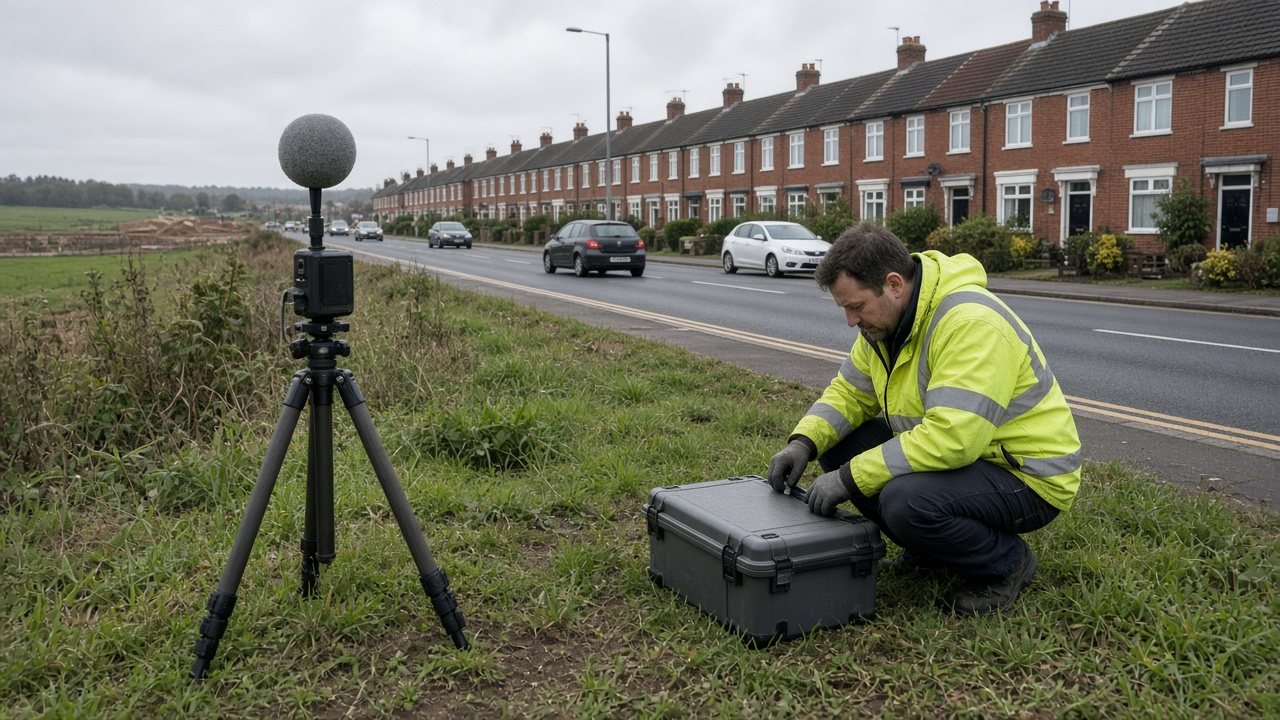
Site work needs a usable location, permission to place equipment and conditions that relate to the question. Explain whether the consultant can access the site independently and whether measurement equipment can remain secure. Provide the contact responsible for unlocking buildings or arranging access to neighbouring land where that is proposed.
For an operating business, supply a realistic account of deliveries, machinery and opening patterns. For proposed plant, provide manufacturer sound data and the intended operating arrangement. A consultant cannot resolve a missing equipment specification merely by extending a background survey. Information gaps may need clarification from the designer or supplier before the prediction can proceed.
Ask how weather, interrupted operation or equipment security will be handled commercially. Avoid demanding a fixed fieldwork duration without first agreeing what representative evidence is needed. No universal measurement schedule can be inferred from a headline quotation or from the floor area of the development.
Noise impact assessment inclusions and separate design costs
A report may identify that mitigation is needed without including detailed procurement or construction design. Confirm whether the fee covers only an outline recommendation, a calculation checking a proposed solution, or further work with equipment suppliers. Barriers, enclosures and building elements can have structural, access and maintenance implications outside the acoustic appointment.
The appropriate assessment method also affects the brief. BSI's BS 4142 description concerns industrial and commercial sound, while BSI's BS 8233 description addresses sound insulation and noise reduction for buildings. Ask the consultant to identify the relevant method, rather than requiring the same standard for every noise source.
Check whether updated plant selections, layout changes and responses to council comments are included. Planning requirements differ by council, and a later request can change the agreed work. Keep the submitted drawing revision with the report so an apparent omission can be distinguished from a subsequent design change.
Preparing a comparable noise impact assessment quotation
Send each consultant the same brief, drawings and planning correspondence. Describe any known constraints, including uncertain equipment choices and access you have not yet secured. Ask for assumptions and exclusions to be written into the quotation, together with the process for approving additional work. This makes comparisons more useful than collecting prices against different verbal descriptions.
Projects involving several planning reports can use our developer support to coordinate enquiries. The guide to what to include in an energy statement is relevant where plant choices are also being developed for an energy submission. Ensure both consultants use the same equipment schedule rather than independently modelling different designs.
Request noise assessment support once the decision sought is clear, even if some technical inputs remain outstanding. List those inputs expressly and agree who will provide them. Keep survey work, report preparation, mitigation development and later revisions visible in the appointment so the quoted scope remains understandable as the project develops.