

Design and Planning
Environmental Noise Survey
It is also called a baseline noise survey or noise monitoring. Developers, architects and planning consultants commission it early, so the design and the planning assessment use real measured data rather than estimates.
Send the site address and plans and we will propose monitoring positions and a survey period.
Measured data is more reliable than estimates from maps or models, and it gives the design team real numbers to work with when choosing glazing, ventilation and layouts.
Your an environmental noise survey report
A survey report with monitoring locations, dates, equipment, weather, measured levels over time and a description of the noise sources heard. The baseline then feeds a residential, commercial or other assessment, which compares it with the proposal.(Source: GOV.UK: Planning practice guidance, Noise)
Where the survey is the first stage of a full assessment, the same consultant usually carries it through to the planning report.
Raw data can be supplied on request, so the council or other consultants can check the analysis.
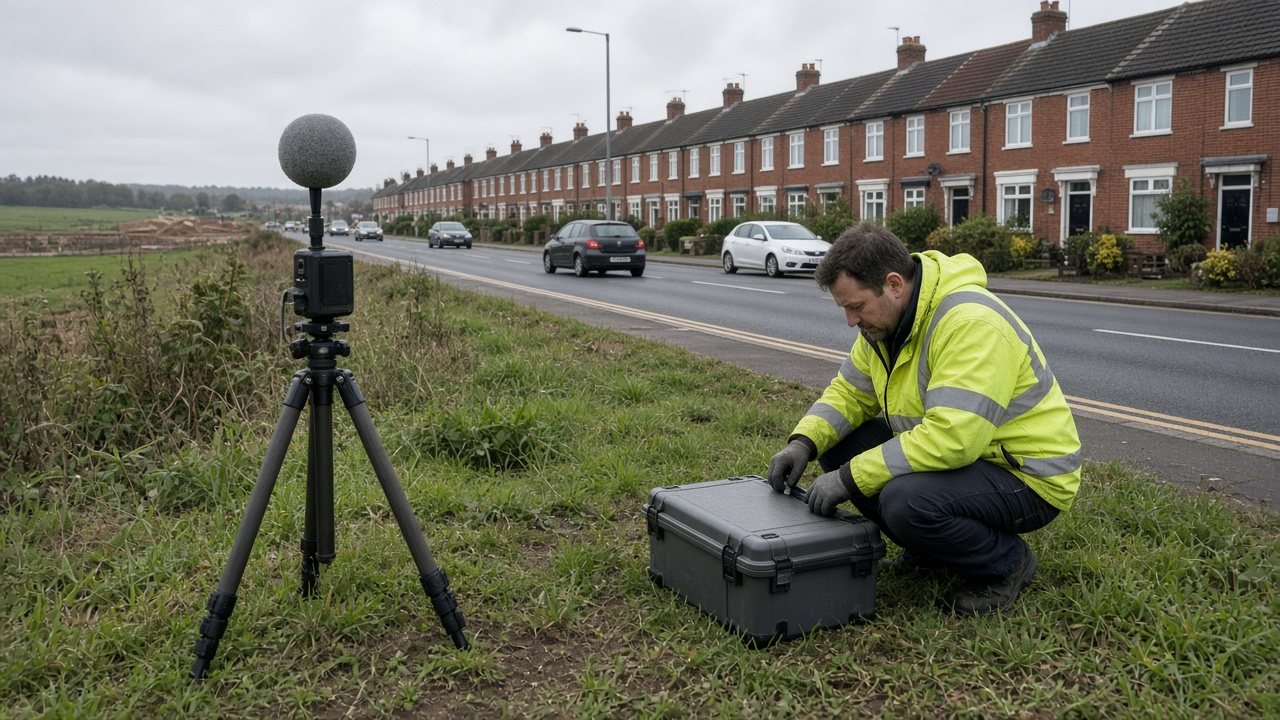
The report explains which sources dominate at each position, such as road traffic, aircraft or plant, which helps the design team decide where mitigation will have most effect. Photographs of each monitoring position are included.
Projects needing an environmental noise survey
- Early feasibility teams
- Establish which parts of a site need closer investigation before committing to a layout.
- Sites with changing activity
- Explain working patterns so monitoring can distinguish typical conditions from temporary disruption.
- Projects reusing older data
- Ask whether surrounding sources and site conditions still match the circumstances previously measured.
Avoiding problems with an environmental noise survey
Unexplained anomalies
Provide an event diary so unusual peaks can be investigated.
Unrepresentative location
Tell the consultant where site access constrains monitor placement.
Missing context
Record whether nearby premises were operating normally during measurement.
Environmental monitoring brief estimator
How this tool decides
Proposed monitoring positions
Enter the location or project description.
Requested day and night coverage
Enter the location or project description.
Known events or dates to avoid
Enter the location or project description.
Access and landowner permission
Enter the location or project description.
Equipment security and power arrangements
Enter the location or project description.
Otherwise / result rule
Agree representative monitoring positions and coverage with the consultant and council before booking.
Planning noise guidance and this page require a representative scope; the supplied per-24-hours, one-meter price unit is not a prescribed monitoring duration. GOV.UK planning practice guidance on noise
Typical project: from £750 per 24 hours, one meter.
Indicative only. This is a typical UK market range based on prices published by other providers, checked November 2026. It is not a quote. Prices exclude VAT unless stated. Contact us for an accurate price for your project.
Based on one published price.
Checked November 2026.
Next step: Send the recorded project details and the page preparation list with your enquiry so we can confirm scope and quote.
Deadline: Confirm the submission or design deadline with the project team.
What to have ready
- A site plan showing boundaries, nearby sound sources and possible monitor positions.
- Details of secure access, power availability where relevant and equipment protection.
- A description of typical activity near the proposed monitoring locations.
- Known roadworks, construction activity or temporary events affecting the area.
- The intended use of the baseline data and any council survey instructions.
How we work this out
The figures shown are indicative. They are ranges taken from prices that UK providers of this service have published, and they are here to help you budget. They are not a quote, an offer or a price guarantee from National Building Compliance.
Your actual price depends on details this tool cannot see, including the size and layout of the building, how many units there are, access, location, how complete your drawings are, and how quickly you need the work. It may be lower or higher than the range shown.
Unless a figure says otherwise, prices exclude VAT. The date each range was last checked is shown beside it.
For an accurate, fixed price, send us your project details. We will confirm the scope and quote before any work is booked.
Indicative market costs
| Case | Unit | Indicative range |
|---|---|---|
| Typical project | per 24 hours, one meter | from £750 Indicative only. This is a typical UK market range based on prices published by other providers, checked November 2026. It is not a quote. Prices exclude VAT unless stated. Contact us for an accurate price for your project. |
Based on one published price.
Checked November 2026.
Environmental Noise Survey for typical project in England typically costs from £750 per 24 hours, one meter before VAT, based on prices published by UK providers and checked in November 2026. This is indicative and not a quote.
Indicative only. This is a typical UK market range based on prices published by other providers, checked November 2026. It is not a quote. Prices exclude VAT unless stated. Contact us for an accurate price for your project.
How baseline noise survey monitoring is planned
You send the site address, plans and the purpose of the survey.
The consultant proposes monitoring positions and a period, agreeing them with the council where needed.
Sound level meters are installed, usually unattended, with attended measurements where useful.
Weather conditions are recorded, as they affect results.
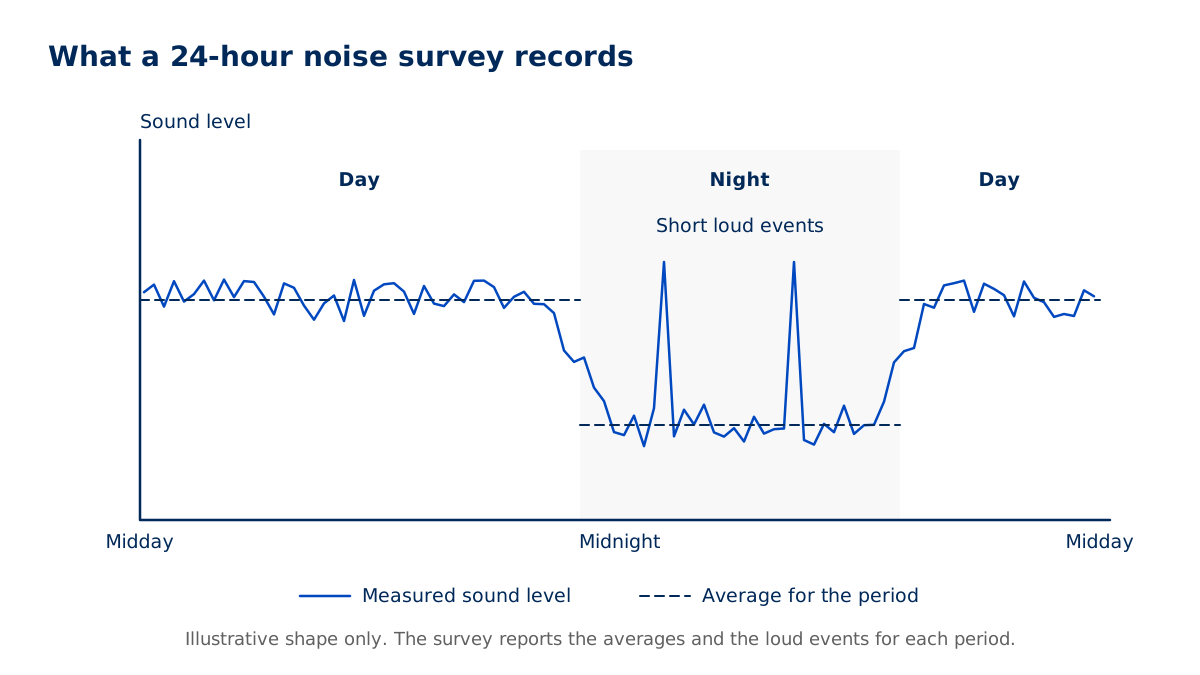
Data are analysed by day and night periods and by noise source.
You receive the baseline report, ready to feed the planning assessment.
Equipment is collected and checked after monitoring.
Information for an environmental noise survey
- A site plan showing boundaries, nearby sound sources and possible monitor positions.
- Details of secure access, power availability where relevant and equipment protection.
- A description of typical activity near the proposed monitoring locations.
- Known roadworks, construction activity or temporary events affecting the area.
- The intended use of the baseline data and any council survey instructions.
The an environmental noise survey submission package
- A monitoring plan with identifiable measurement locations.
- A description of the equipment and measurement arrangements.
- A record of relevant weather and observed site conditions.
- Results organised to suit the intended later assessment.
- Commentary identifying dominant sources and data limitations.
Pricing and scheduling an environmental noise survey
Monitoring positions, site security and the range of sound conditions to capture determine the survey scope. Difficult access or an unrepresentative operating period can affect scheduling. Tell us about nearby works and unusual events before booking so the consultant can plan how to obtain and interpret representative data.
- Price
- [[TO SUPPLY: Environmental Noise Survey price from]]
- Turnaround
- [[TO SUPPLY: Environmental Noise Survey turnaround time]]
When an environmental noise survey is needed
GOV.UK planning practice guidance on noise explains that decisions need to take account of the acoustic environment, and that factors such as the source, time of day and character of the noise affect whether it is a concern. A measured baseline is the usual evidence for that.(Source: GOV.UK: Planning practice guidance, Noise; GOV.UK: National Planning Policy Framework)
Planning requirements differ by council. Some authorities ask for a baseline survey before an application is validated, while others deal with it through a planning condition after consent. The council's environmental health team may advise on where monitoring positions should go and which parts of the day and night the measurements should cover, so check its pre-application advice or the condition wording before the survey is booked.
Councils often ask that monitoring covers both day and night, and that it represents normal conditions at the site. The council's environmental health officer may want to agree the positions and duration before work starts.
Obtaining usable environmental noise survey data
Surveys are most often rejected because the scope was not agreed, the period missed a typical time such as a weekday night, or weather spoiled the data. Agree positions and duration first, and avoid holiday periods or unusual disruption on the site.
Note any unusual events during monitoring, such as roadworks nearby, so they can be identified in the data and excluded or explained in the report.
Monitors are placed and secured to suit the site, so tell us about any security concerns when booking.
Questions about an environmental noise survey
How long does an environmental noise survey run?
It depends on the site and the noise sources. The period is agreed before monitoring starts.
Is the survey the same as a noise impact assessment?
No. The survey measures existing noise. The assessment uses that baseline to judge the effect of the proposal.
Does someone need to stay on site?
Unattended monitoring runs on its own. Attended measurements need a consultant present for a short time.
What if the weather is bad?
Rain and wind affect results, so monitoring may be extended or repeated.
How much does an environmental noise survey cost?
Published prices: [[TO SUPPLY: price from]]. Turnaround: [[TO SUPPLY: turnaround time]].
Can you survey before I own the site?
Yes, with the landowner's permission for access.
Request a quote
Tell us about the project once. We will confirm which services apply and send a quote.
All fields marked * are required.