
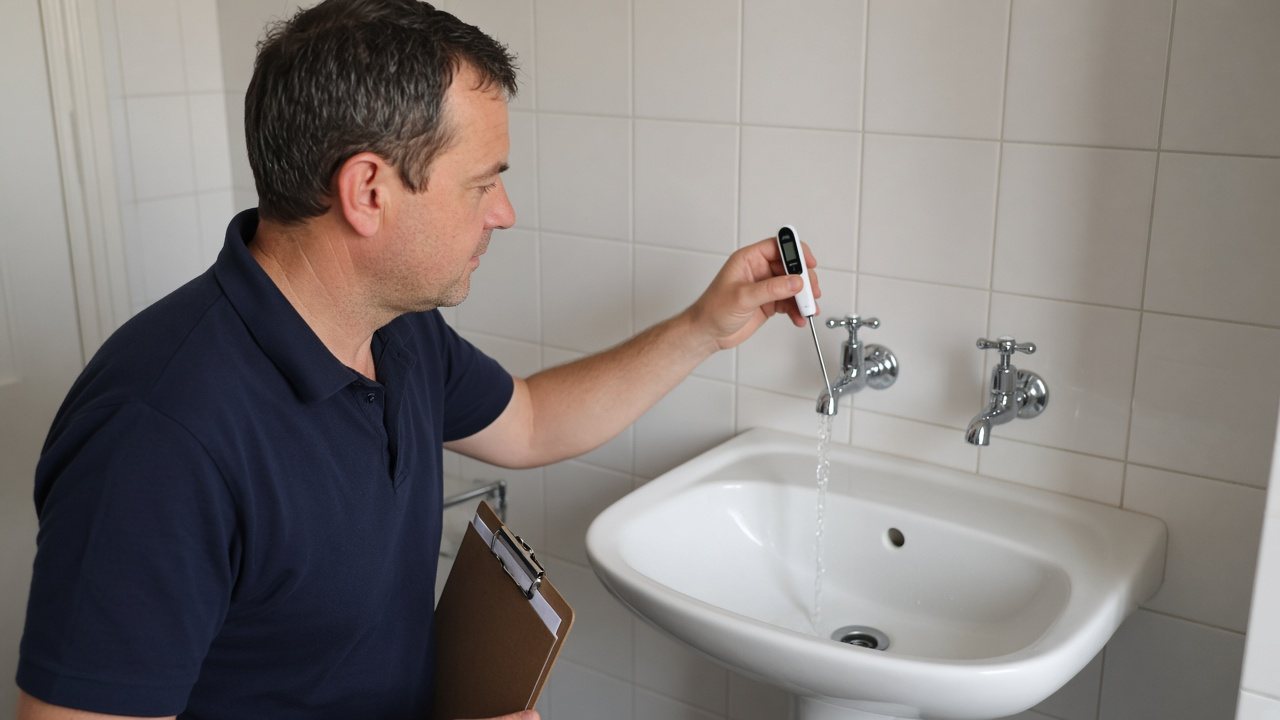
A proportionate landlord legionella assessment
A useful assessment explains the property rather than simply attaching a certificate to its address. HSE's landlord guidance describes most residential hot and cold water systems as generally low risk because water is used and replaced regularly. It also makes clear that landlords must assess risk and apply suitable controls. Low risk is a conclusion supported by the circumstances, rather than an assumption based only on residential use.
Start by identifying how water enters, is heated, is stored and reaches outlets. A landlord who knows there is a combi boiler may still be unaware of an old tank, redundant branch or shower that receives little use. Ask about these details instead of using the boiler description as a substitute for understanding the entire installation.
Our legionella risk assessments service can help where you want an assessor to examine the system. The landlord compliance checklist places this task alongside other property enquiries without implying that all checks follow the same process.
Landlord legionella responsibilities between owner, agent and tenant
An instruction to an assessor should identify who holds keys, who understands the plumbing and who can authorise repairs. If a managing agent coordinates the visit, agree how findings reach the landlord and how outstanding actions are tracked. A report that remains in an email inbox does little to help the person expected to arrange a repair.
HSE's landlord guidance advises informing tenants about control measures, including cleaning showerheads, avoiding changes to hot-water storage settings and reporting heating problems. Translate the assessment into instructions relevant to that property, rather than issuing a long technical document without explaining the tenant's part.
Do not make tenants diagnose concealed plumbing or decide whether a design defect is acceptable. Provide a reporting route for faults and confirm who will respond. If a tenant reports that hot water no longer heats properly, record the report and the repair outcome together so that the assessment can be considered against the changed circumstances.
Landlord legionella assessment scenarios worth discussing
Occupation patterns can matter as much as the fittings. Tell the assessor whether the property is a continuous tenancy, shared accommodation or a home with gaps between lets. Explain any history of unused bathrooms or recurring water complaints. These facts help the assessment describe actual use rather than an idealised occupied property.
- An empty letting: HSE's landlord guidance calls for careful management of water stagnation during extended vacancy. Discuss the vacancy and proposed reoccupation, rather than relying on the previous tenancy's usage pattern.
- A flat with shared plant: establish which equipment serves the flat and which serves the block. Obtain the relevant system information from the managing party so the assessment does not stop at an unexplained boundary.
- A refurbished bathroom: retain details of changed pipework and outlets. Give the assessor the completed layout, because the original drawing may no longer describe where water can remain unused.
- A little-used shower: explain how it is actually used and cleaned. HSE's landlord guidance identifies showers as a means of creating inhalable water droplets and advises tenant cleaning and disinfection.
Landlord legionella records, testing and review
A purchased laboratory test is not a substitute for understanding and controlling the water system. HSE's landlord guidance says sampling is not usually required for domestic hot and cold water systems and that health and safety law does not require a legionella test certificate. If testing is proposed, ask what question it will answer and how the result will change the response.
Keep a practical record of the system, findings, actions and completed repairs. HSE's landlord guidance distinguishes the circumstances where recording is a statutory duty from the usefulness of landlords retaining records for their own purposes. Avoid treating every domestic landlord as subject to the same statutory paperwork requirement.
For review, HSE's landlord guidance says to revisit the assessment periodically in case anything changes. Our guide to how often a legionella risk assessment should be reviewed separates that advice from unsupported certificate expiry claims.
- Understand the water supply and use of the property before choosing controls.
- Keep assessment, remedial work and ongoing checks as separate tasks with clear owners.
- Give tenants practical instructions that match their own water system.
Briefing a landlord legionella assessor
HSE's landlord guidance says most landlords can assess domestic risks themselves without professional training or accreditation, and can appoint someone if they do not feel competent or prefer not to do it. If using an assessor, explain unfamiliar components and access restrictions before the visit rather than leaving them to emerge in the report.
Provide existing findings, maintenance information and tenant-reported problems with your legionella assessment enquiry. Ask how the proposed report will distinguish immediate concerns, recommended improvements and ongoing controls. The landlord compliance package can support coordination of separate enquiries, while your property action record should identify who will close each water-system task.
About our Legionella Risk Assessments service
For the service itself, see Legionella Risk Assessments.